
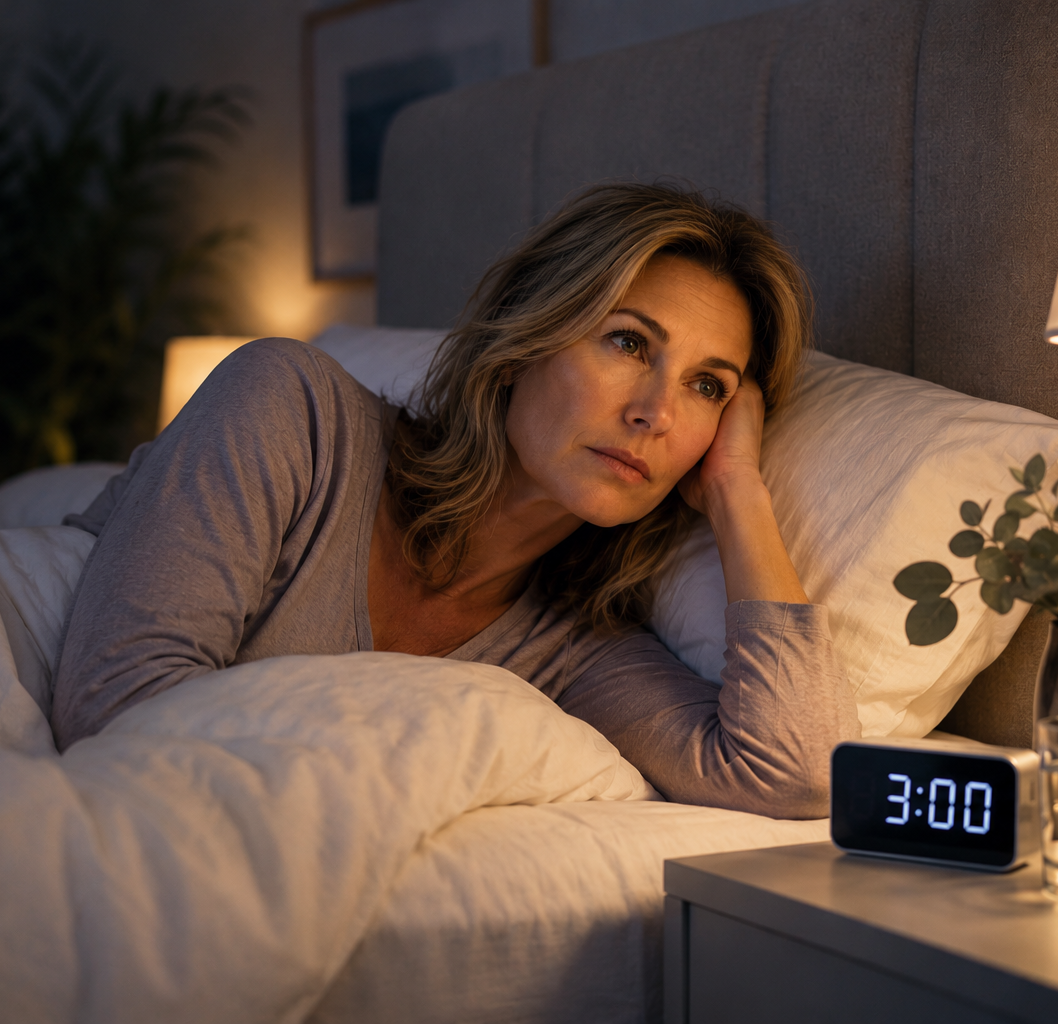
If you've found yourself regularly waking up at 3am during perimenopause, you're far from alone.
Many women who have previously enjoyed uninterrupted sleep suddenly find themselves lying awake in the early hours, unable to drift back off. Whether it's 3am, 4am, or somewhere in between, these middle-of-the-night awakenings can leave you feeling exhausted, frustrated, and wondering what's changed.
The answer often lies in the complex hormonal shifts that occur during perimenopause.
Why Does Perimenopause Affect Sleep?
Perimenopause is the transitional phase leading up to menopause, during which hormone levels fluctuate significantly.
Two hormones in particular—oestrogen and progesterone—play important roles in sleep regulation. As these hormones rise and fall unpredictably, many women notice changes in both the quality and duration of their sleep.
Common sleep-related symptoms during perimenopause include:
- Waking during the night
- Difficulty falling back asleep
- Lighter, less restorative sleep
- Night sweats
- Increased anxiety at bedtime
- Feeling tired despite spending enough time in bed
Why Is 3am Such a Common Wake-Up Time?
While there isn't one single explanation, several factors may contribute to those frustrating early-morning awakenings.
Hormonal Fluctuations
During perimenopause, changing hormone levels can make sleep more fragmented.
Rather than remaining in deeper stages of sleep throughout the night, some women become more susceptible to waking during natural sleep transitions.
Changes in Body Temperature
Many women experience increased sensitivity to temperature changes during perimenopause.
Even a slight rise in body temperature can be enough to trigger wakefulness, particularly during the early morning hours when the body is naturally cycling through different sleep stages.
Stress and Mental Load
For many women, perimenopause coincides with some of life's busiest years.
Career responsibilities, family commitments, ageing parents, financial pressures, and changing health needs can all contribute to heightened stress levels.
It's not uncommon to wake in the early hours with a racing mind, only to find sleep becoming increasingly elusive.
Changes in Sleep Architecture
As we age, sleep naturally becomes lighter.
This doesn't mean something is wrong; it's simply a normal part of the ageing process. However, when combined with hormonal fluctuations, these changes can make night-time awakenings feel more frequent and disruptive.
The Impact of Broken Sleep
- Occasional sleep disruption is normal, but repeated poor sleep can affect many aspects of wellbeing.
Many women report:
- Lower energy levels
- Difficulty concentrating
- Increased irritability
- Reduced resilience to stress
- Changes in skin appearance
- Feeling less refreshed in the morning
- Sleep remains one of the body's most important periods for recovery and restoration, making quality rest particularly valuable during times of hormonal change.
What Can Help?
Create a Consistent Evening Routine
The body thrives on routine.
Going to bed and waking at similar times each day can help support your natural sleep-wake cycle, even when hormones feel less predictable.
Keep Your Bedroom Cool
A cooler sleeping environment may help minimise discomfort caused by temperature fluctuations and night sweats.
Breathable bedding and lightweight sleepwear can also contribute to greater comfort.
Limit Stimulation Before Bed
Try reducing exposure to bright screens, work emails, and mentally demanding tasks in the hour before sleep.
Gentle activities such as reading, stretching, or listening to calming music may help prepare the body for rest.
Focus on Sleep Comfort
Comfort matters more than many people realise.
The right sleep environment—including supportive bedding and a pillow that properly supports your head and neck—can help reduce unnecessary discomfort and improve overall sleep quality.
Avoid Watching the Clock
If you wake during the night, constantly checking the time can increase frustration and make it harder to relax.
Instead, focus on remaining calm and comfortable, allowing your body the opportunity to return to sleep naturally.
When Should You Seek Advice?
If sleep problems are significantly affecting your quality of life, it may be worth speaking with a healthcare professional.
They can help explore potential causes and discuss options that may support better sleep during perimenopause.
The Bottom Line
Waking up at 3am during perimenopause is a common experience, but that doesn't make it any less frustrating.
Hormonal fluctuations, temperature changes, stress, and natural shifts in sleep patterns can all contribute to disrupted sleep during this stage of life.
While there's no single solution, creating a supportive sleep environment and prioritising comfort can help improve the quality of the rest you do get.
Because during perimenopause, good sleep isn't simply a luxury—it's an essential part of feeling your best, both inside and out.



Leave a comment
This site is protected by hCaptcha and the hCaptcha Privacy Policy and Terms of Service apply.