
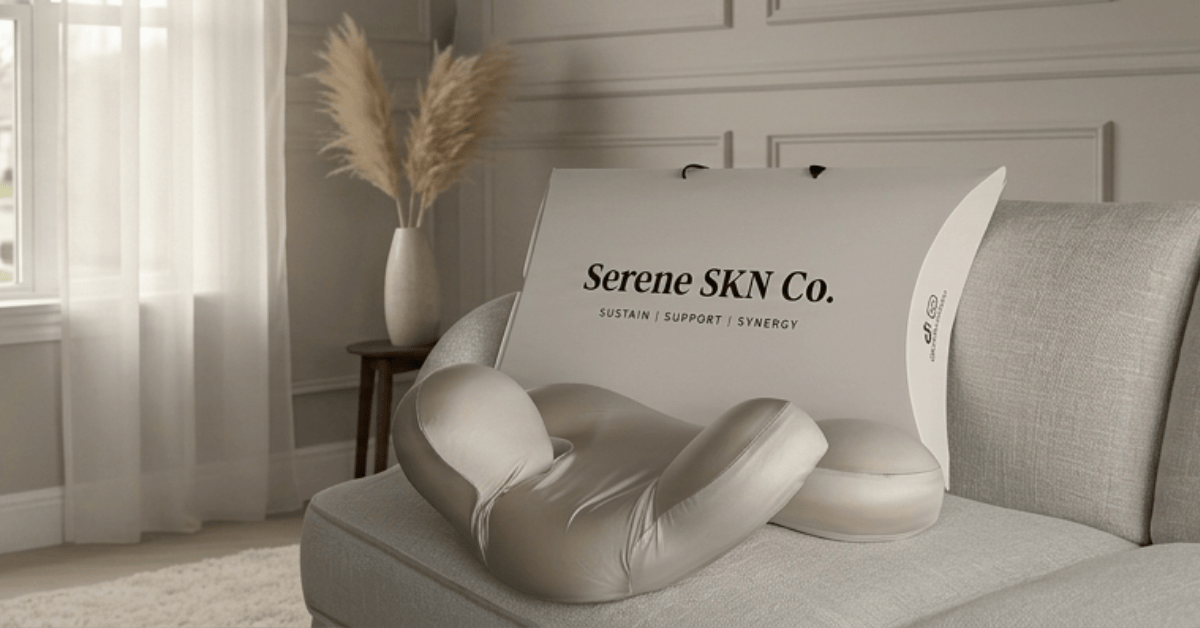
Your skincare routine probably ends with a cleanser, serum, moisturiser or overnight treatment.
But there’s one thing most routines overlook: what happens when your face meets your pillow.
For hours each night, your skin can be exposed to pressure, compression and friction against the surface you sleep on. Research published in Aesthetic Surgery Journal has explored how compression, shear and stress forces can act on the face during side and stomach sleeping, contributing to what are commonly known as sleep lines.
That’s where the beauty pillow comes in.
A beauty pillow is designed differently from a traditional pillow, taking into account not only comfort and support, but also how your face and skin interact with your sleep surface throughout the night.
So, what exactly makes a pillow a beauty pillow — and is it worth adding one to your nightly routine?
What Is a Beauty Pillow?
A beauty pillow is a specially designed pillow intended to reduce unnecessary pressure and contact around the face while you sleep.
Unlike a traditional rectangular pillow, many beauty pillows use contours, cut-outs or supportive shaping to create more space around the face, particularly when sleeping on your side.
The principle is relatively simple.
On a traditional pillow, your face can be pressed directly into the surface beneath it. A contoured beauty pillow aims to change the way your head and face are supported, helping to reduce direct pressure on areas of the face that would otherwise be compressed against the pillow.
Think of it as taking the same considered approach you already apply to your skincare products and extending it to your sleep environment.
What Are Sleep Lines?
Not every facial line forms in the same way.
Expression lines develop in areas repeatedly affected by facial movement, such as smiling, squinting and frowning.
Sleep lines are different.
Research published in Aesthetic Surgery Journal describes sleep wrinkles in relation to the mechanical distortion of the face during sleep. When sleeping on the side or stomach, the face can experience compression, shear and stress against the sleeping surface.
You may have noticed the temporary version yourself: waking up with creases across your cheek after spending hours sleeping on one side.
They often disappear as the morning progresses.
However, skin naturally changes as we age, becoming thinner, drier and more prone to visible lines and wrinkles. This makes reducing unnecessary overnight facial compression an increasingly interesting consideration for people taking a preventative approach to skincare.
Importantly, a beauty pillow should not be viewed as a replacement for good skincare, daily SPF or professional dermatological advice.
Instead, it addresses another part of the equation: the physical environment your face encounters while you sleep.
Why Does Your Sleeping Position Matter?
If you sleep on your back, your face generally has much less direct contact with your pillow.
For side and stomach sleepers, things are different.
The cheek and surrounding facial tissue can be pushed against the pillow as the position and weight of the head create pressure against the sleeping surface.
Research into sleep wrinkles has specifically identified compression, shear and stress acting on the face during side and stomach sleeping.
The obvious solution might therefore seem to be:
Just sleep on your back.
For some people, that works.
For habitual side sleepers, however, simply deciding to remain on your back throughout the night may not be particularly realistic.
That’s where the design of a beauty pillow becomes relevant.
Rather than demanding that you completely change the way you naturally sleep, a well-designed beauty pillow can use strategic contouring to accommodate side sleeping while helping to reduce unnecessary facial contact.
Pressure and Friction: What’s the Difference?
Pressure and friction are often discussed together, but they aren’t quite the same thing.
Pressure
Pressure occurs when your face is pushed into the pillow surface.
Think about waking up with one cheek visibly creased after spending several hours sleeping on that side.
Friction
Friction occurs as two surfaces move against one another.
Your skin can move against your bedding as you naturally change position throughout the night.
These are therefore two separate considerations when thinking about your sleep environment:
the surface material and the shape of the pillow itself.
And that leads to one of the most common questions about beauty pillows.
Beauty Pillow vs Silk Pillowcase: What’s the Difference?
Silk pillowcases and beauty pillows are often discussed together, but they address different aspects of the sleep environment.
A silk pillowcase primarily changes the surface your skin and hair come into contact with.
A contoured beauty pillow changes the physical shape and positioning of the sleep surface itself.
In simple terms:
Silk focuses primarily on the surface.
A contoured beauty pillow focuses primarily on positioning and facial pressure.
The two aren’t necessarily competitors.
They can be complementary.
A smooth pillowcase cannot fundamentally change the shape of a conventional pillow. Equally, the shape of a specialist pillow doesn’t make the material touching your skin irrelevant.
If you’re choosing between them, think about what you’re actually trying to change.
If your primary concern is the fabric against your skin or hair, the pillowcase material may be particularly important.
If you’re concerned about waking with your face compressed into your pillow, the physical design of the pillow becomes much more relevant.
Can a Beauty Pillow Help With Sleep Lines?
This deserves a careful answer.
There is credible evidence supporting the underlying principle: side and stomach sleeping can expose the face to mechanical compression and distortion, which may contribute to the formation of sleep lines.
It therefore makes sense to consider how the design of your pillow influences those forces.
However, that does not mean every product marketed as an anti-wrinkle or beauty pillow can guarantee that it will prevent wrinkles.
Wrinkles have multiple causes, including natural ageing, sun exposure, facial movement and other lifestyle and environmental factors.
A beauty pillow should therefore be viewed as one part of a considered approach to skincare and sleep, rather than a replacement for SPF, skincare, healthy habits or professional treatment.
The aim is simple:
reduce unnecessary facial pressure rather than promise impossible perfection.
Can Side Sleepers Use a Beauty Pillow?
Absolutely — and this is where a contoured design can become particularly relevant.
Side sleepers naturally place more of the side of their face against their sleeping surface than back sleepers.
Rather than simply telling side sleepers to change a lifelong sleeping habit, a beauty pillow can be designed to accommodate that position differently.
When choosing one, look for:
- Sufficient head and neck support
- Space around the facial area
- Contours suitable for side sleeping
- A comfortable, skin-conscious surface
- Materials that maintain their shape throughout the night
- A removable and washable cover
Comfort still matters.
A pillow that theoretically reduces facial contact but prevents you from sleeping comfortably isn’t a particularly good beauty investment.
The goal should be to support better sleep while being more considered about what happens to your skin during it.
Is a Beauty Pillow Good for Your Skincare?
A beauty pillow doesn’t make your serum more powerful.
It doesn’t replace retinoids, moisturiser, SPF or professional treatments.
What it can change is the sleep environment surrounding your skincare routine.
If you’ve carefully cleansed your skin and applied your evening products, it makes sense to consider the surface your face will then spend hours resting against.
Skincare is usually approached almost entirely through the products we apply.
But caring for your skin can also mean thinking about the environment around it.
That’s why we think of a beauty pillow as:
The Final Step in Your Skincare Routine.
What Should You Look for in a Beauty Pillow?
Not every unusually shaped pillow is automatically a good beauty pillow.
There are several things worth considering.
1. Facial Space
Look at where your cheek actually sits when you’re sleeping on your side.
The design should create meaningful space around the face rather than simply adding decorative contours.
2. Support
Beauty benefits shouldn’t come at the expense of sleep.
The pillow still needs to support your head and neck comfortably.
3. Material
Consider both the internal pillow material and the surface that comes into contact with your skin.
Your pillow is something you use night after night, so comfort, breathability and feel matter.
4. Washability
Anything regularly touching your face needs to be practical to clean.
A removable, washable cover makes considerably more sense for everyday use.
5. Your Sleeping Position
Consider how you actually sleep — not how you wish you slept.
If you naturally spend most of the night on your side, choose a pillow designed with side sleeping in mind.
6. Credible Claims
Be cautious of products promising to erase wrinkles simply because you sleep on them.
A credible beauty pillow should be able to explain how its design works and what it has been designed to achieve, rather than relying entirely on dramatic anti-ageing promises.
Meet the Serene SKN Co Beauty Pillow
Serene SKN Co began with a simple observation.
We invest considerable thought — and often considerable money — into the products and treatments we use on our skin.
Premium skincare. Facials. Microneedling. Botox. Fillers. Carefully considered evening routines.
Then we spend every night sleeping on a surface most of us have barely considered from a skincare perspective.
We thought that deserved more attention.
The Serene SKN Co Beauty Pillow was created to complement the care you already give your skin.
Its contoured design is intended to reduce pressure and friction while you sleep, helping to minimise the appearance of sleep lines while providing comfortable support for your head and neck.
It’s not about replacing your skincare routine.
It’s about considering what happens after it.
Because caring for your skin shouldn’t stop when you go to sleep.
DISCOVER THE SERENE BEAUTY PILLOW
Beauty Sleep Is About More Than Skincare
There’s one final point worth making.
Don’t sacrifice good sleep in pursuit of better-looking skin.
Quality sleep matters for far more than appearance, and a beauty pillow shouldn’t force you into an uncomfortable sleeping position simply for cosmetic reasons.
The better philosophy is to support the way you naturally sleep while becoming more considered about what happens to your skin while you’re doing it.
Because the best beauty routines aren’t necessarily about adding another serum, cream or treatment.
Sometimes, they’re about reconsidering the things we’ve always taken for granted.
Including our pillow.
Beauty Pillow FAQs
What is a beauty pillow?
A beauty pillow is a pillow designed with both sleep and the way your face interacts with the sleeping surface in mind. Many use specialist contours or shaping intended to create more space around the face and reduce unnecessary pressure during sleep.
What is the difference between a beauty pillow and a normal pillow?
A traditional pillow is primarily designed around general comfort and head support. A beauty pillow adds another consideration: how the face interacts with the pillow while you sleep.
Contoured designs can create additional space around areas of the face that may otherwise be pressed directly against a traditional pillow.
Do beauty pillows prevent wrinkles?
It would be too strong to claim that every beauty pillow prevents wrinkles.
Research supports the idea that mechanical compression during side and stomach sleeping may contribute to sleep-line formation, but wrinkles have multiple causes.
A beauty pillow is better understood as a way of reducing unnecessary facial pressure while sleeping rather than as a guaranteed method of preventing wrinkles.
What are sleep lines?
Sleep lines are facial lines associated with the compression and distortion of the skin during sleep.
They differ from expression lines, which develop in areas repeatedly affected by facial movements such as smiling, squinting and frowning.
Is a beauty pillow suitable for side sleepers?
It can be.
Side sleepers are particularly relevant because the side of the face naturally has greater contact with the pillow.
Look for a contoured pillow specifically designed to accommodate side sleeping while creating space around the facial area.
Is a silk pillowcase the same as a beauty pillow?
No.
A silk pillowcase changes the material touching your skin and hair, whereas a contoured beauty pillow changes the shape and positioning of the sleeping surface.
They therefore address different aspects of the sleep environment and can potentially be used together.
Can I use my normal skincare with a beauty pillow?
Yes. A beauty pillow is intended to complement a skincare routine rather than replace it.
Continue following the skincare routine recommended for your individual needs, including appropriate sun protection.
How long does it take to get used to a contoured beauty pillow?
This varies from person to person.
Any meaningful change in pillow shape or sleeping position can require an adjustment period, particularly if you have used a traditional rectangular pillow for many years.
Give yourself time to become familiar with the contours and find the sleeping position that feels most natural and comfortable.
This article is for general educational purposes and should not be considered medical or dermatological advice. Individual skin concerns should be discussed with an appropriately qualified healthcare professional.

Leave a comment
This site is protected by hCaptcha and the hCaptcha Privacy Policy and Terms of Service apply.